
The Silent Crisis of Mineral Deficiency
Systemic malnutrition is rarely about a lack of calories; it is a lack of chemistry. In developing and developed nations alike, the reliance on highly refined staple grains has created a biological void. Micronutrient fortification is the process of deliberately increasing the content of an essential micronutrient—i.e., vitamins and minerals—in a food, so as to improve the nutritional quality of the food supply and provide a public health benefit with minimal risk to health.
Strategic Vehicles for Nutrient Delivery
To achieve maximum efficacy, we focus on "vehicles"—staple foods that are consumed consistently across all socioeconomic brackets.
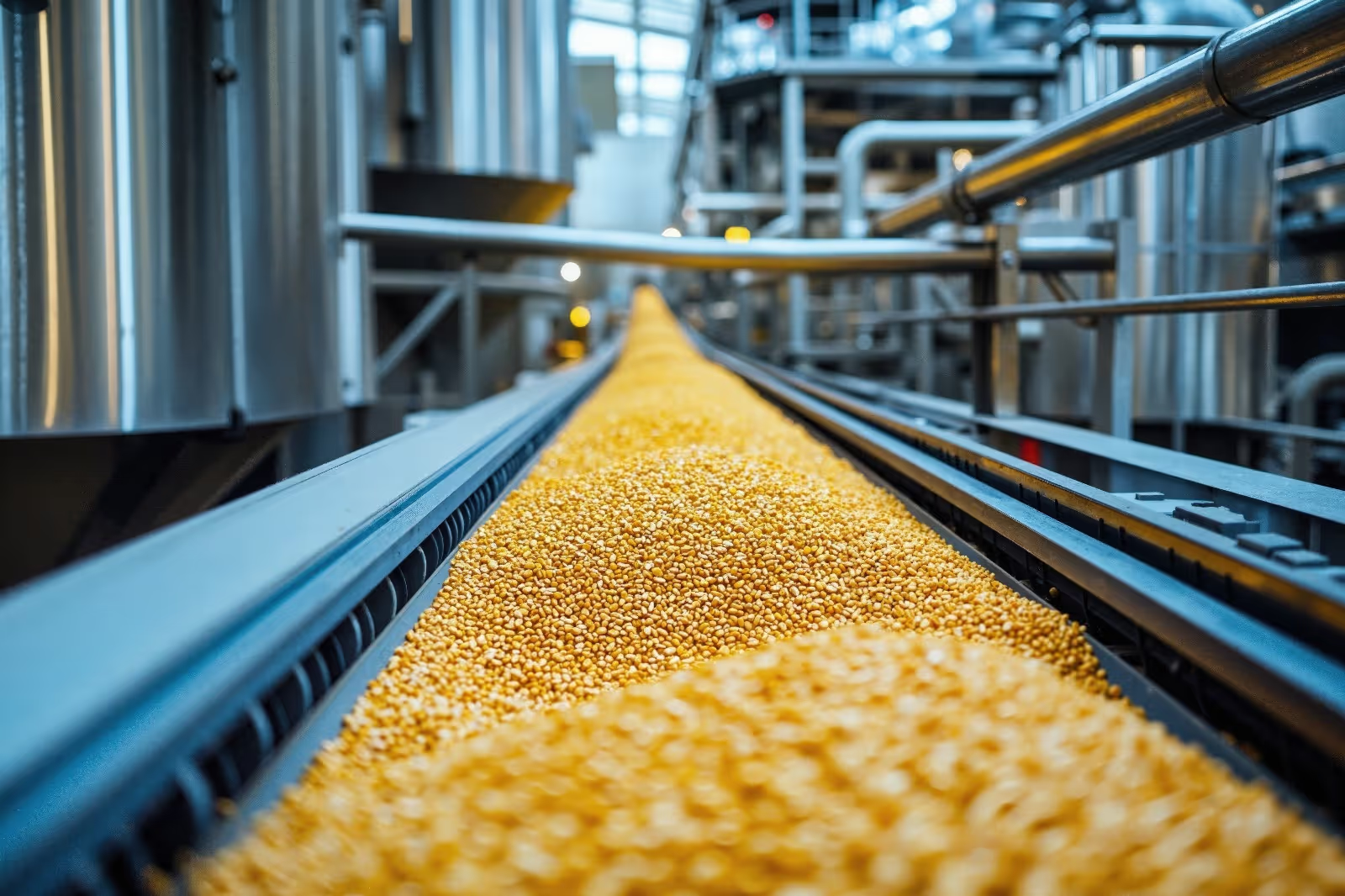
- Cereal Grains: Fortifying wheat and maize flour with Iron, Folic Acid, and B-vitamins to support cognitive development and maternal health.
- Iodized Salt: A historic success in global advocacy, virtually eliminating goiter and supporting thyroid health worldwide.
- Edible Oils: Serving as a carrier for fat-soluble vitamins like A and D, critical for immune function and bone density.
- Biofortification: Working at the agricultural level to breed crops (like Golden Rice) that naturally synthesize higher levels of Provitamin A.
The Economics of Prevention
Advocacy for fortification is built on a foundation of economic logic. Every $1 invested in basic micronutrient fortification yields an estimated $8 to $30 in economic return due to:
- Reduced Healthcare Burden: Drastic drops in hospitalizations for birth defects and infectious diseases.
- Increased Educational Attainment: Well-nourished children show higher cognitive retention and school attendance.
- Workforce Productivity: Elimination of chronic anemia increases physical and mental output in adult populations.
Overcoming Bioavailability Barriers
Not all fortificants are created equal. Our research-backed approach prioritizes High-Absorption Chelates. Traditional iron salts often cause digestive distress or fail to be absorbed; our advocacy pushes for the use of Sodium Iron EDTA and other compounds that bypass traditional inhibitors like phytates in grains.