

Micronutrient Science
Micronutrient Science: The Cellular Blueprint
Introduction: Beyond the Macro-Lens
For decades, nutritional science focused almost exclusively on macronutrients—the carbohydrates, fats, and proteins that provide energy (calories). However, modern biochemistry has revealed that human vitality is governed by a much more intricate system: Micronutrients. These vitamins and minerals, required in amounts ranging from micrograms to milligrams, serve as the essential co-factors for every physiological process. Without them, the "engine" of the human body may have fuel, but it lacks the spark to ignite.
The Dual Architecture of Vitamins
Vitamins are organic compounds that are essential for life but cannot be synthesized by the body in sufficient quantities. They are broadly categorized by their solubility, which dictates how they are absorbed, transported, and stored.
1. Water-Soluble Vitamins (The B-Complex and Vitamin C)
Water-soluble vitamins are absorbed directly into the bloodstream. Because the body does not store significant reserves of these nutrients, they must be replenished through consistent daily intake.
- The B-Vitamin Battery: B1 (Thiamine), B2 (Riboflavin), B3 (Niacin), B5 (Pantothenic Acid), B6 (Pyridoxine), B7 (Biotin), B9 (Folate), and B12 (Cobalamin). Together, they manage the conversion of food into cellular energy (ATP).
- Vitamin C (Ascorbic Acid): Beyond its role in immune support, Vitamin C is a primary driver of collagen synthesis and a powerful antioxidant that neutralizes free radicals produced by environmental stress.
2. Fat-Soluble Vitamins (A, D, E, and K)
These vitamins require the presence of dietary fats to be absorbed across the intestinal wall. They are stored in the liver and adipose (fat) tissue, acting as a biological "savings account."
- Vitamin A: Essential for photoreceptor function in the eyes and cellular differentiation.
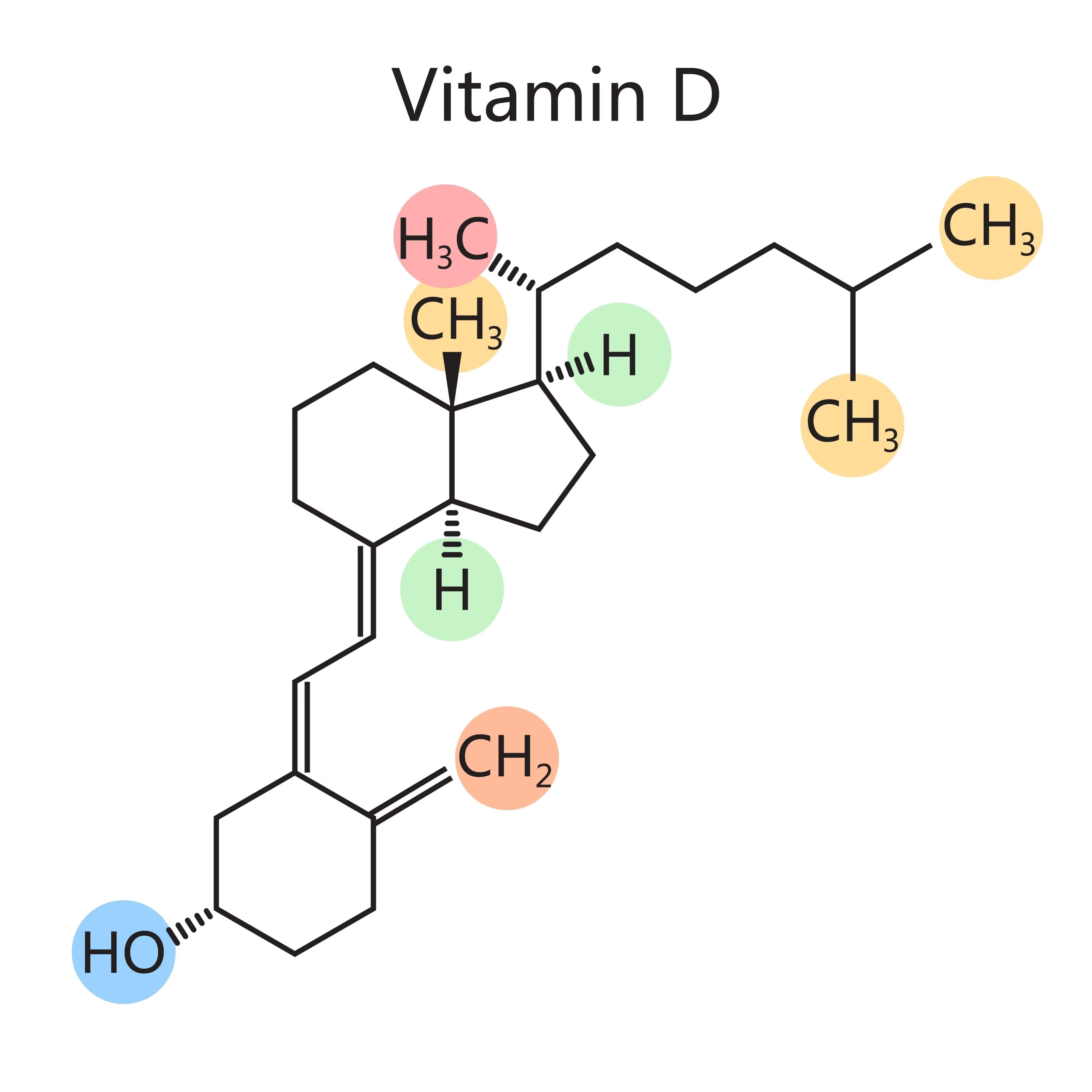
- Vitamin D: Functioning more like a pro-hormone than a vitamin, it regulates calcium absorption and influences over 2,000 genes.
- Vitamin E: A membrane-stabilizing antioxidant that protects lipids from oxidation.
- Vitamin K: The primary regulator of blood coagulation and bone mineralization.
Shutterstock
The Mineral Matrix: Elements of Earth
While vitamins are organic (made by plants or animals), minerals are inorganic elements that originate in the soil and water.
Macrominerals
Needed in larger amounts (typically >100mg/day), these provide the structural and electrochemical foundation of the body.
- Magnesium: Involved in over 300 enzymatic reactions, including muscle relaxation and nervous system regulation.
- Calcium: Critical for skeletal density and the signaling pathways that allow the heart to beat.
- Potassium & Sodium: The "Electrolyte Pump" that maintains fluid balance and cellular electrical potential.
Trace Elements
Though needed in "trace" amounts, their absence can lead to systemic failure.
- Zinc: A cornerstone of DNA synthesis and immune cell development.
- Selenium: A vital component of glutathione peroxidase, the body's master antioxidant enzyme.
- Iron: The central atom in hemoglobin, responsible for the transport of life-sustaining oxygen.
Biochemical Pathways: The Role of Co-Enzymes
In the world of Micronutrient Science, most vitamins act as co-enzymes. Imagine an enzyme as a specialized tool designed to perform a task—like building a DNA strand or breaking down a toxin. Often, that tool is "locked" or inactive. A vitamin acts as the key that fits into the enzyme, activating it and allowing the chemical reaction to occur. Without the micronutrient "key," the reaction stalls, leading to metabolic dysfunction.
The Threat of Oxidative Stress
One of the most critical roles of micronutrients is the management of reactive oxygen species (ROS).
- Metabolic Byproducts: As cells create energy, they produce "exhaust" in the form of free radicals.
- Cellular Damage: If left unchecked, these radicals steal electrons from stable molecules, damaging DNA and cell membranes.
- The Antioxidant Defense: Vitamins C, E, and minerals like Selenium donate electrons to neutralize free radicals, preventing "biological rust" (aging and disease).
Conclusion: The Case for Clinical Literacy
The study of micronutrients is the study of human potential. When we bridge the gap between "minimum intake to survive" and "optimal intake to thrive," we move away from reactive medicine and toward proactive, bio-intelligent health. This literacy hub is dedicated to translating these complex chemical interactions into actionable knowledge.